All You Need To Know About The New Lagos Cybersecurity Guidelines
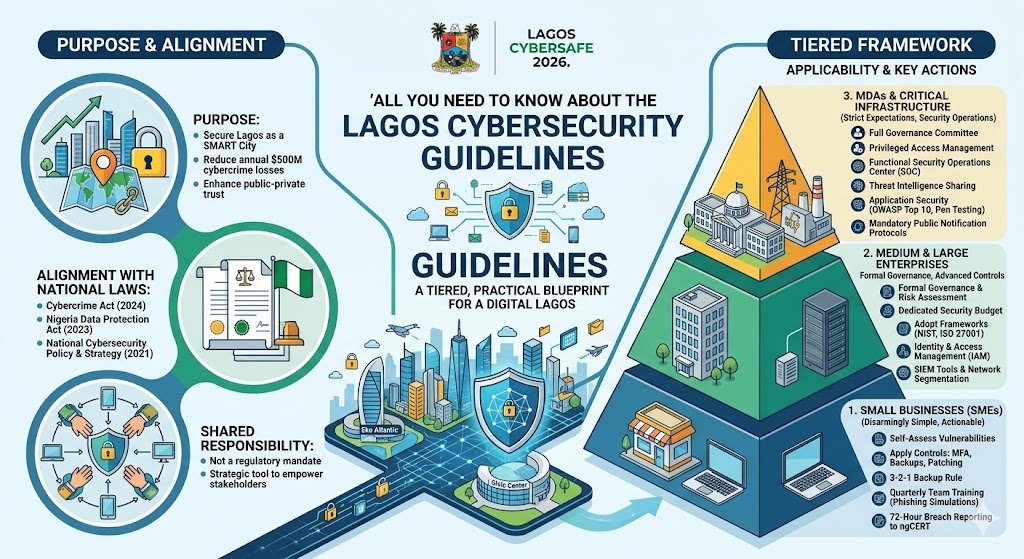
The Lagos State Government has introduced a set of cybersecurity guidelines designed to enhance digital safety and security for all residents, businesses, and public institutions. This initiative is a proactive measure to protect the state’s rapidly growing digital economy and build trust in its online ecosystem.
The guidelines are strategically aligned with established national frameworks, ensuring a cohesive approach to cybersecurity. These include:
The Cybercrime Act (2024)
The Nigeria Data Protection Act (2023)
The National Cybersecurity Policy and Strategy (2021)
The primary goal is to create a secure, resilient, and trusted digital environment that fosters innovation, protects citizens’ data, and secures critical infrastructure.
Key Areas of Focus
The guidelines are structured to provide clear and actionable advice for different segments of society.
1. For Individuals and Residents
This section focuses on empowering citizens to protect themselves from common online threats. Key recommendations include:
Strong Password Management: Creating complex, unique passwords for different accounts and using password managers.
Phishing and Scam Awareness: Recognizing and avoiding malicious emails, text messages, and social media posts designed to steal personal information.
Secure Social Media Use: Adjusting privacy settings, being cautious about sharing personal information, and identifying fake profiles.
Safe Browsing Practices: Using secure Wi-Fi networks, verifying website authenticity (look for `https://`), and avoiding suspicious downloads.
Device Security:Regularly updating software on all devices (phones, laptops, etc.) and installing reputable antivirus software.
2. For Businesses (SMEs and Corporations)
The guidelines aim to help businesses protect their assets, customer data, and reputation from cyberattacks. The focus is on building a strong security posture through:
Data Protection Compliance: Implementing measures to comply with the Nigeria Data Protection Act (NDPA), including secure data storage, access controls, and transparent privacy policies.
Employee Training and Awareness: Conducting regular training sessions to educate employees on identifying cyber threats and following security protocols.
Incident Response Planning: Developing a clear plan for how to respond to a security breach, including steps to contain the threat, notify affected parties, and recover operations.
Network and System Security: Implementing technical safeguards like firewalls, encryption, and regular security audits to protect internal systems.
Secure Remote Work Policies: Establishing clear guidelines for employees working from home to ensure company data remains secure.
3. For Public Institutions and Government Agencies
This section addresses the unique security needs of government bodies to protect sensitive public data and ensure the continuity of essential services.
Protecting Critical Infrastructure: Securing digital systems that control essential services like transportation, healthcare, and utilities.
Data Governance: Establishing clear policies for the handling, storage, and sharing of citizens’ data held by government agencies.
Secure Digital Services: Ensuring that government websites and e-governance platforms are built with robust security features to protect user information.
Inter-Agency Collaboration: Creating channels for different government bodies to share threat intelligence and coordinate responses to cyber incidents.
Significance of the Guidelines
The introduction of these guidelines is a critical step for several reasons:
Economic Growth: A secure digital environment encourages more businesses and individuals to participate in the digital economy, fostering investment and innovation.
Public Trust: By demonstrating a commitment to protecting data, the government builds public confidence in its digital services and initiatives.
Proactive Defense: It shifts the focus from reacting to cyberattacks to proactively building a culture of security and resilience across the state.
To access the full document, you can typically find it on the official website of the Lagos State Government or the Ministry of Innovation, Science and Technology.